Double Crochet Increase and Decrease (DC2tog) Tutorial
This post may contain affiliate links. If you make a purchase through links on our site, we may earn a commission.
Mastering the double crochet decrease is a fundamental skill that will open up your project queue to so many possibilities. In this tutorial, I will teach you exactly how to DC2tog (double crochet 2 together) and how to DC increase (DC inc). You will find step-by-step instructions, photos, and my full video tutorial to mastering these techniques. If you need a refresher on the double crochet stitch itself, start with my tutorial on the double crochet stitch.
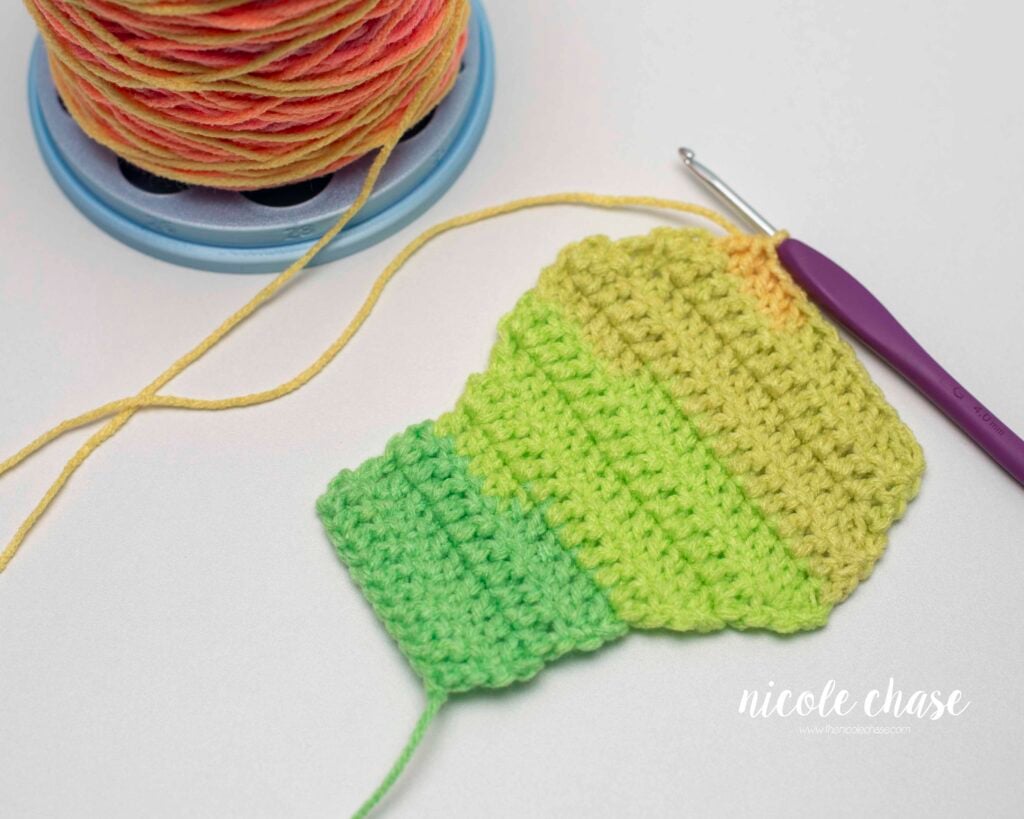
Table of Contents
Understanding Double Crochet Increase (DC Inc)
A double crochet increase (DC inc) is made when you work two DC stitches into the same stitch or space. Each increasing stitch will increase your row or round stitch count by one stitch. Adding these extra stitches in a single place expands the size of your fabric. Here is my tutorial on the double crochet stitch if you need a refresher on the basics.
INC or inc is often the crochet stitch abbreviation for the increasing stitch. An increase can be done with a variety of stitches, so some patterns may indicate an increase based on the stitch you are using. For example: 2 SC, 2 HDC, 2 DC, etc. This is especially helpful if you are working on a pattern that requires multiple stitches.
What is a Double Crochet Increase Used For?
An increasing stitch is used to add more stitches to your project, which in turn makes it larger. Double crochet increases are commonly used for shaping larger, looser fabric projects, including garments, sleeves, blankets, hats, and more. The DC stitch creates a taller fabric, meaning the size increases more quickly than a single crochet piece.
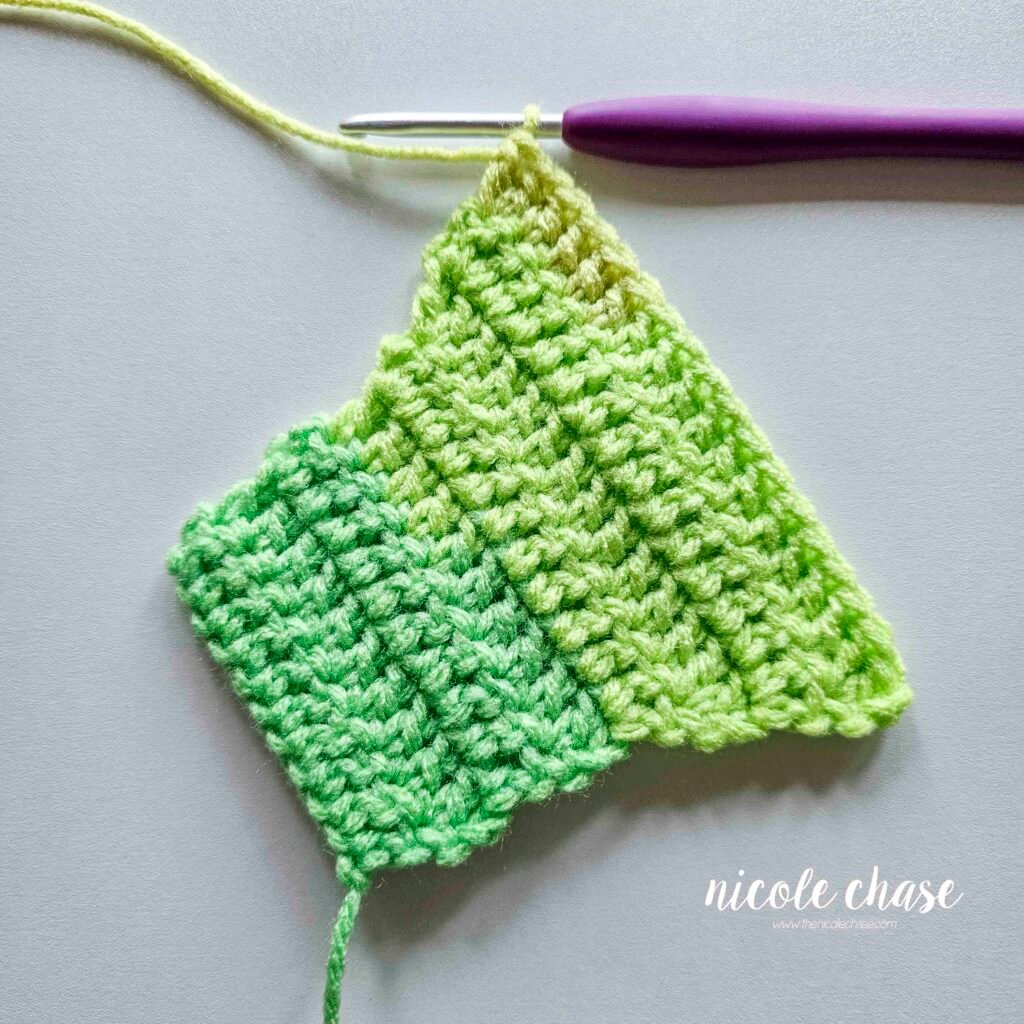
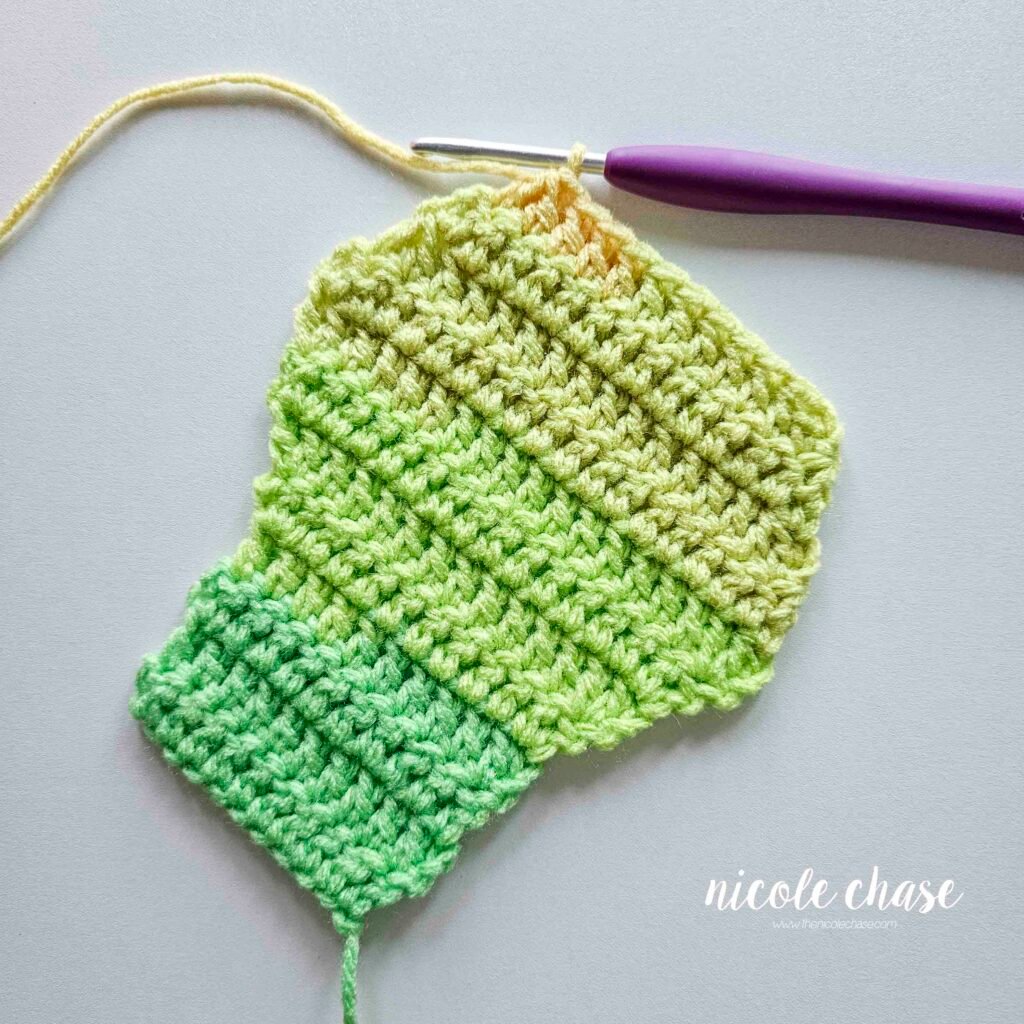
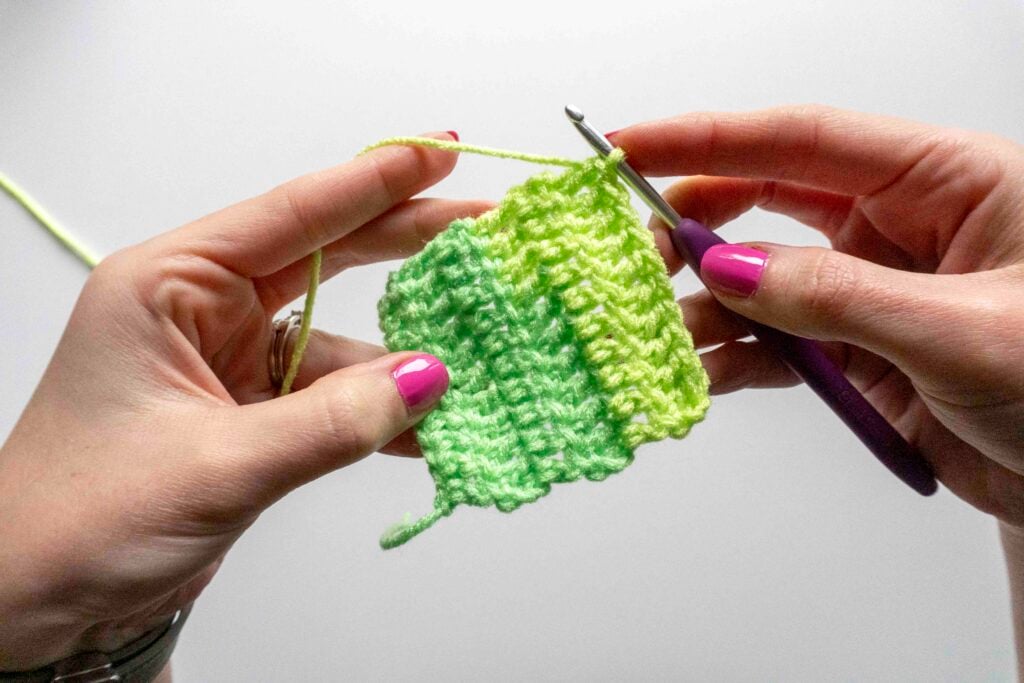
In the photo above, I started out with 10 double crochet stitches and then did a few rows that included a DC increase on both the beginning and end of the row, causing the piece to slowly get wider.
Step-by-Step: How to Double Crochet Increase
Since a double crochet increase is just two standard DC stitches worked into the same space, this technique is simple. If you are comfortable with the basic DC stitch, you only need to focus on where the second stitch goes:
1. Work the First DC: Yarn over, insert your hook into the designated stitch, yarn over, pull up a loop (3 loops on hook), yarn over, pull through 2 loops, yarn over, pull through final 2 loops. This completes your first DC stitch.
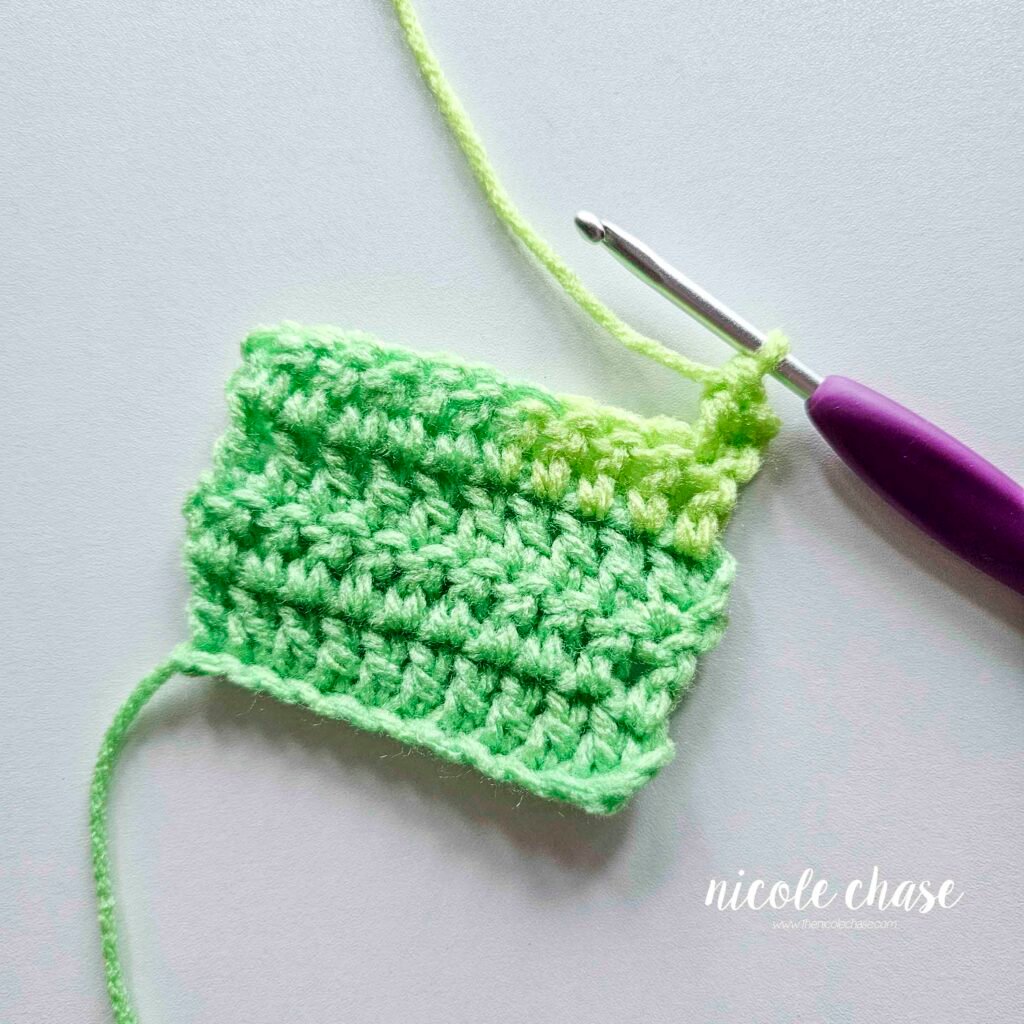
2. Work the Second DC in the Same Spot: Repeat the entire DC stitch process by inserting your hook into the exact same stitch where you just placed the first DC. This completes your second DC stitch (and your total increase).
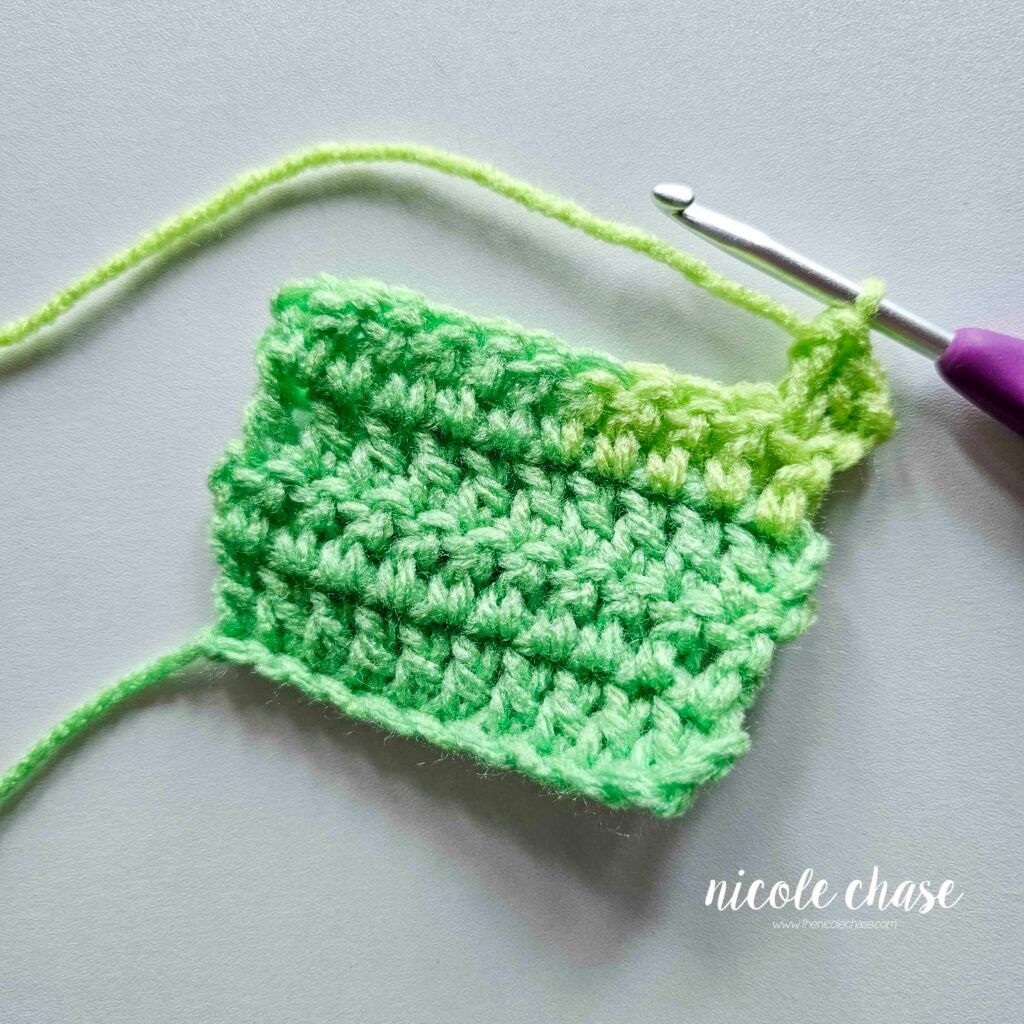
Here you can see the piece get wider, as each row starts and ends with a DC increase. I started out with 10 double crochet stitches and then after 4 rows, the piece slowly became wider. I ended with a stitch count of 18 double crochet stitches.
Mastering the Double Crochet Decrease (DC2tog)
A double crochet decrease is made when you work one stitch over the spaces where you would normally put two separate stitches. One decreasing stitch will reduce your row or round stitch count by one stitch. Adding this decreasing stitch narrows the size of your fabric.
DEC or dec can be used as the abbreviation for the decreasing stitch. As with an increase, a decrease can be done in a variety of stitches, so some patterns may indicate a decrease based on the stitch you are using (SC2tog, HDC2tog, DC2tog, etc.).
What is DC2tog?
When working a project with double crochet stitches, a decrease is commonly referred to as DC2tog. This is the abbreviation for “double crochet two together”, otherwise known as a double crochet decrease.
Similarly, you may also see a decrease referred to as HDC2tog or SC2tog, based on the stitch that you are working in.
What is a Double Crochet Decrease Used For?
A decreasing stitch is used to reduce the stitches in your project, which in turn makes it smaller. Double crochet decreases are commonly used for shaping various projects like garments, socks, hats, and more.
Because the double crochet stitch is tall, the decrease can create a quicker slope in your fabric compared to a single crochet decrease.
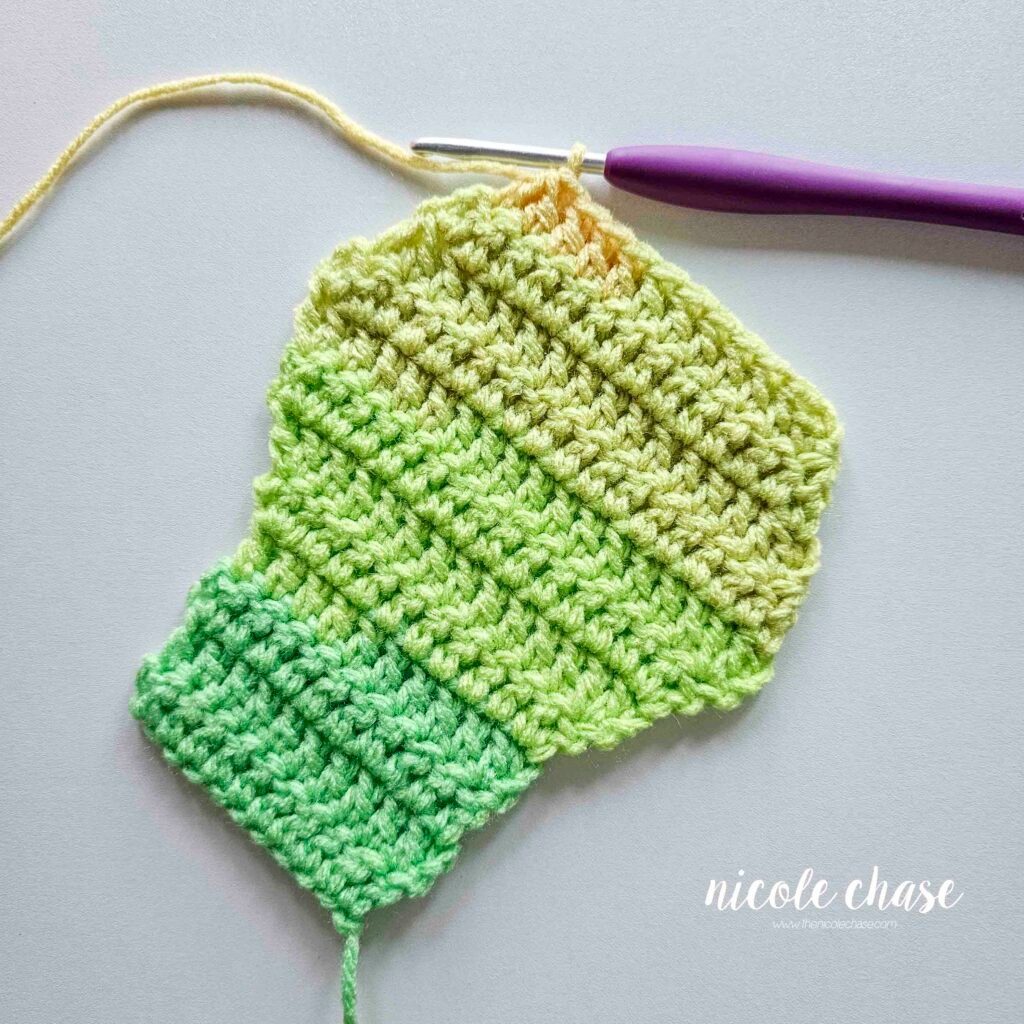
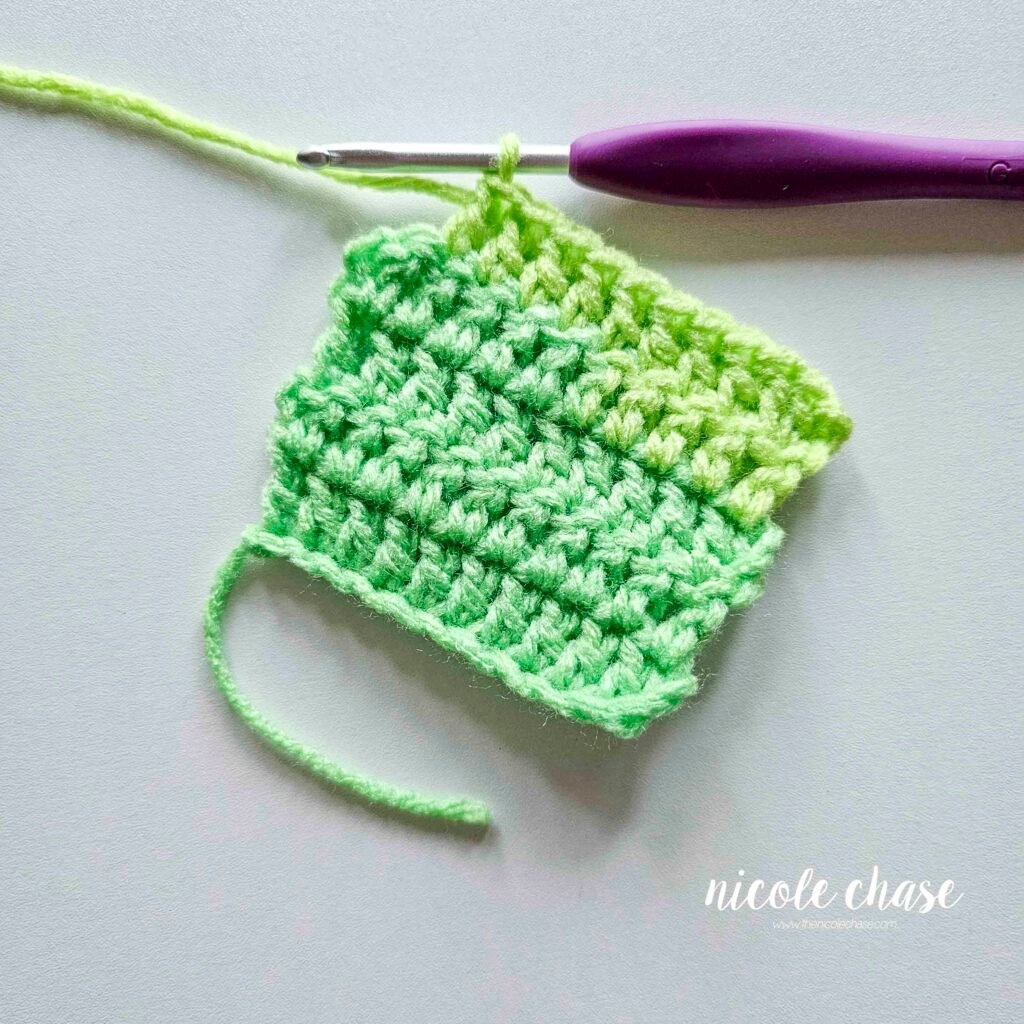
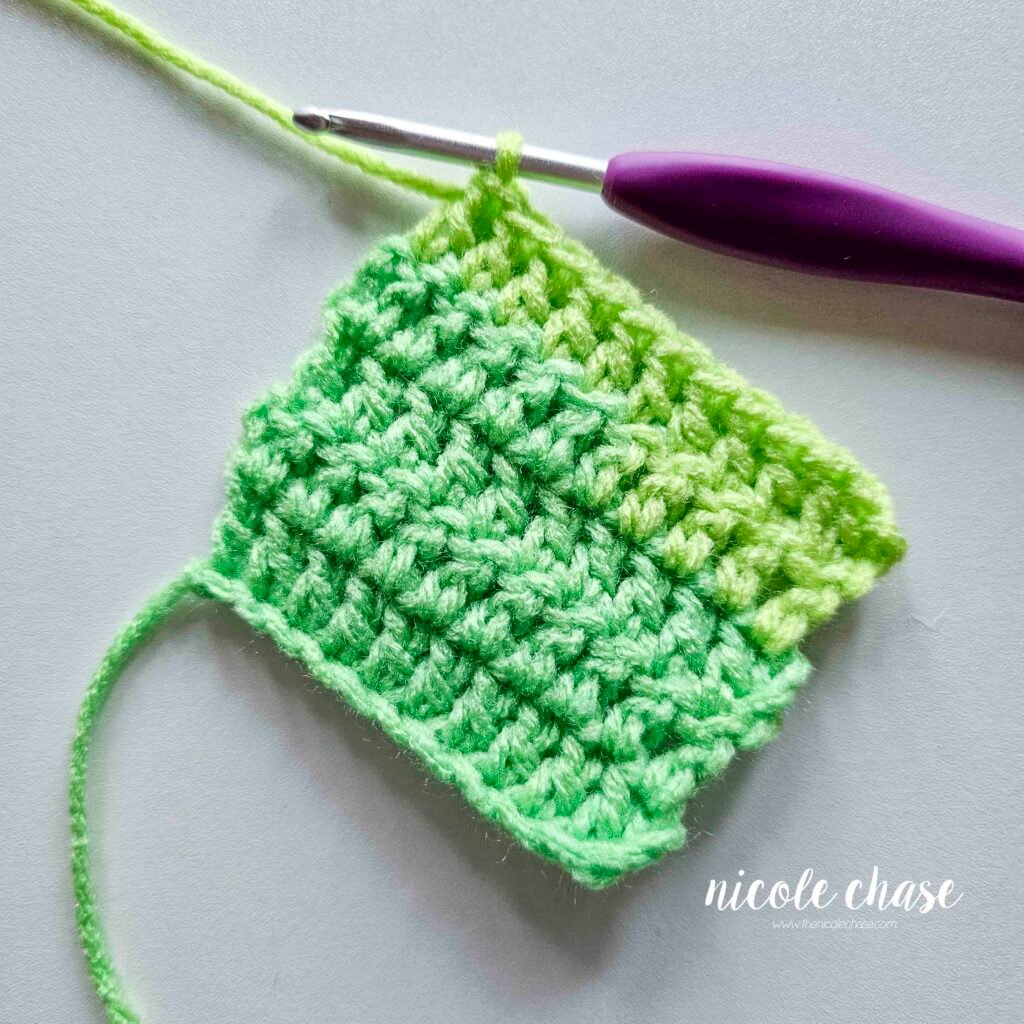
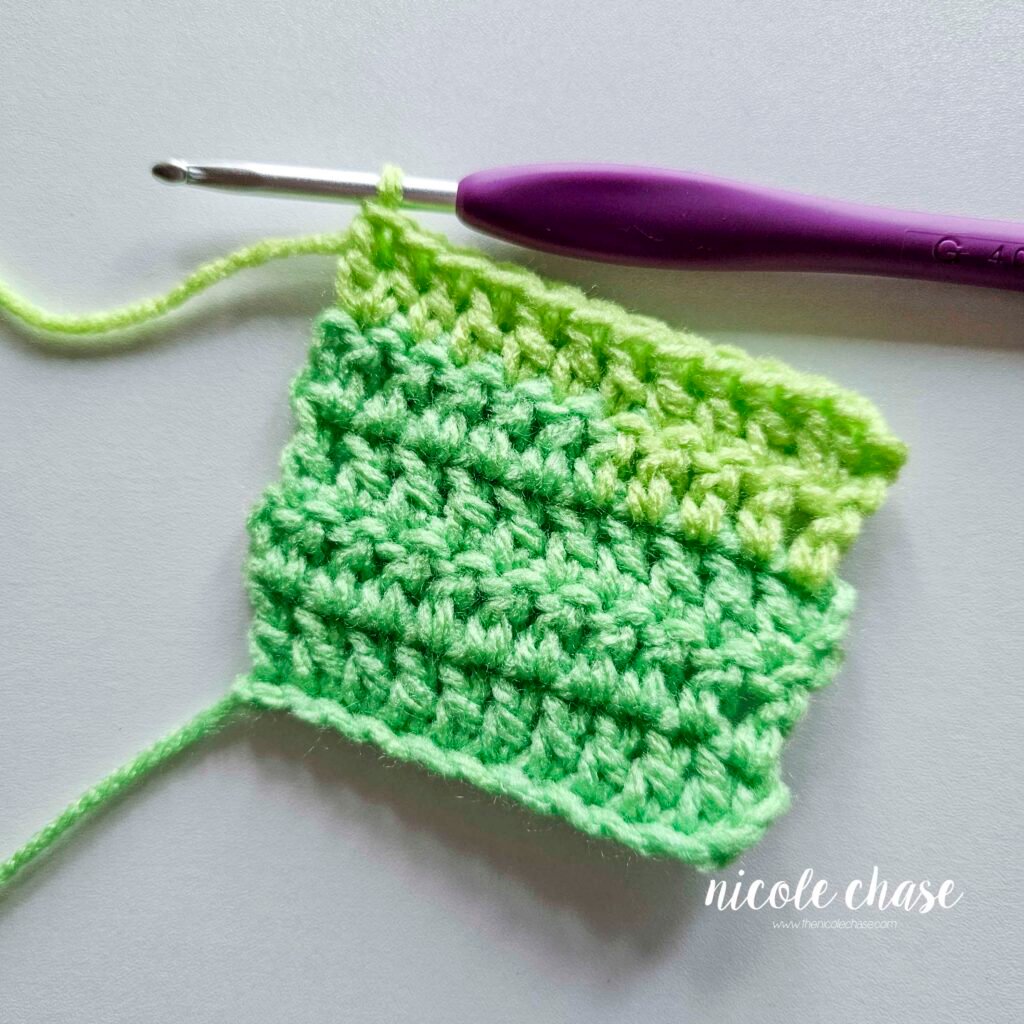
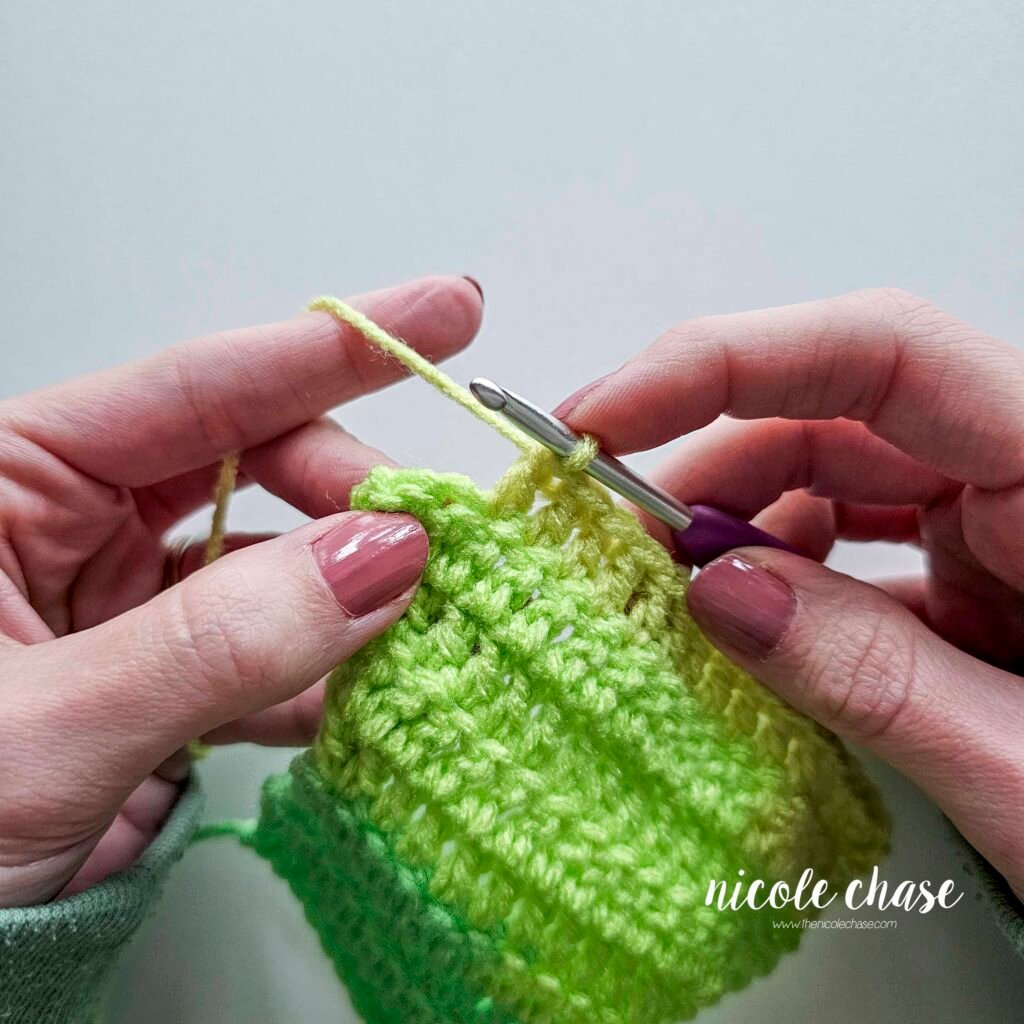
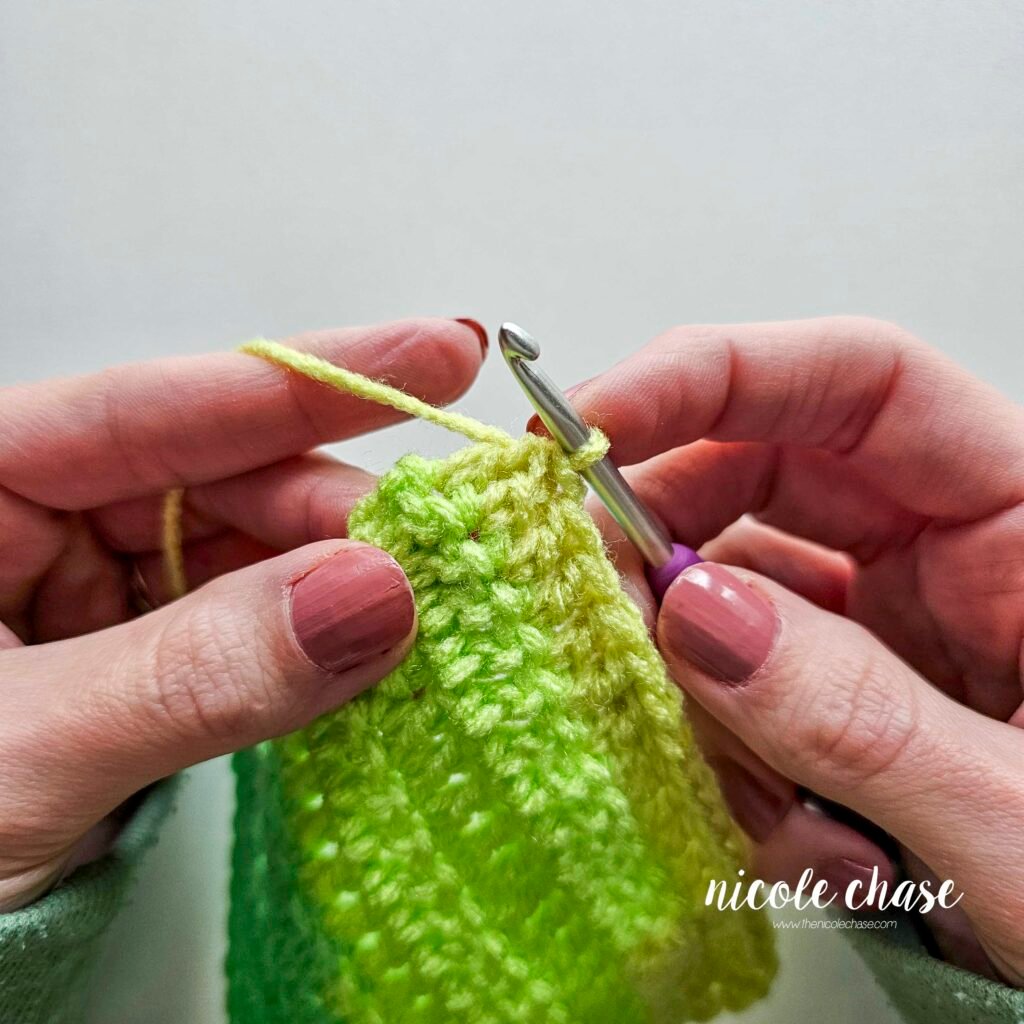
In the photo above, after the increasing that I did above, I started out with 18 double crochet stitches and then did a few rows that included a DC decrease (DC2tog) on both the beginning and end of the row, causing the piece to slowly get more narrow.
Step-by-Step: How to DC2tog (Double Crochet 2 Together)
The DC2tog stitch is worked by crocheting the first part of a double crochet stitch over the first designated stitch, and then crocheting the second part of a double crochet stitch over the second designated stitch. Then, the two half-stitches are combined at the very end.
1. Start the First Stitch: Yarn over, insert your hook into the first designated stitch, yarn over, and pull up a loop (you should have 3 loops on your hook).
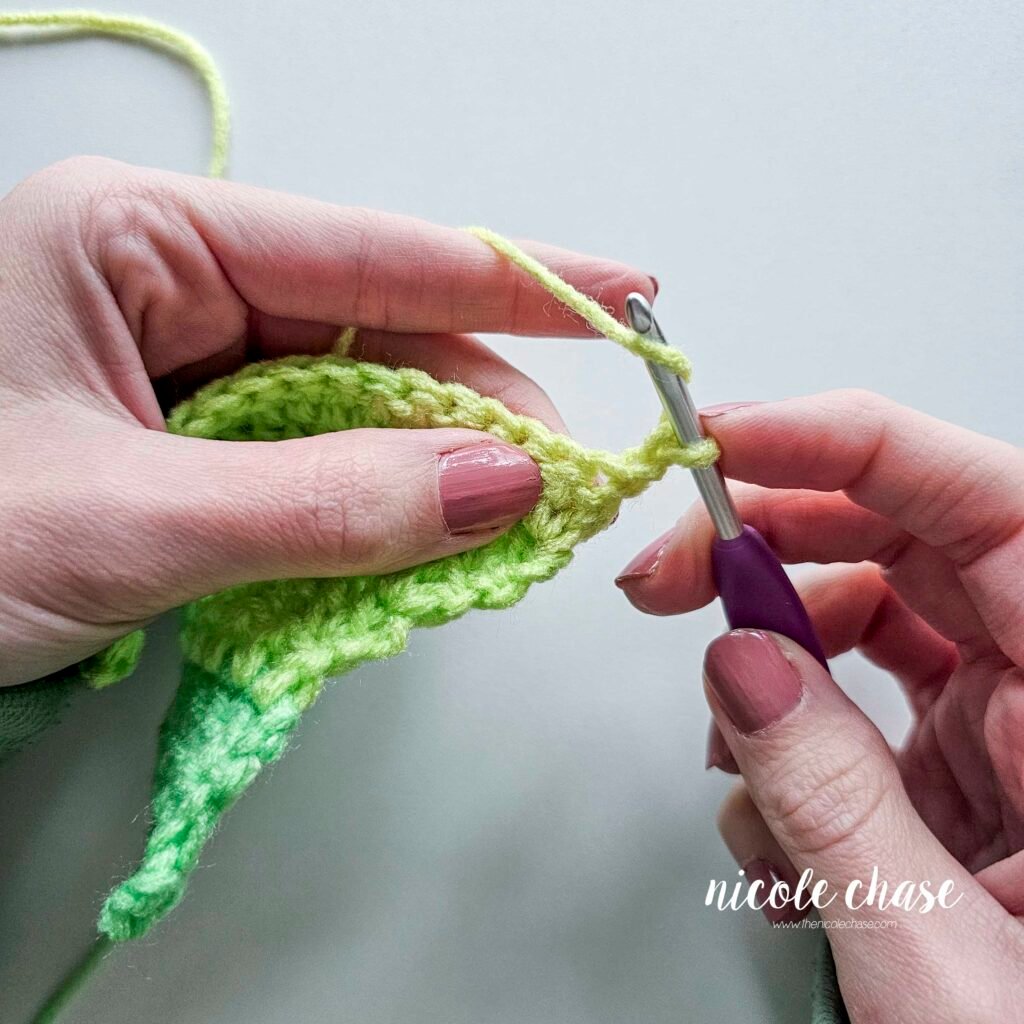
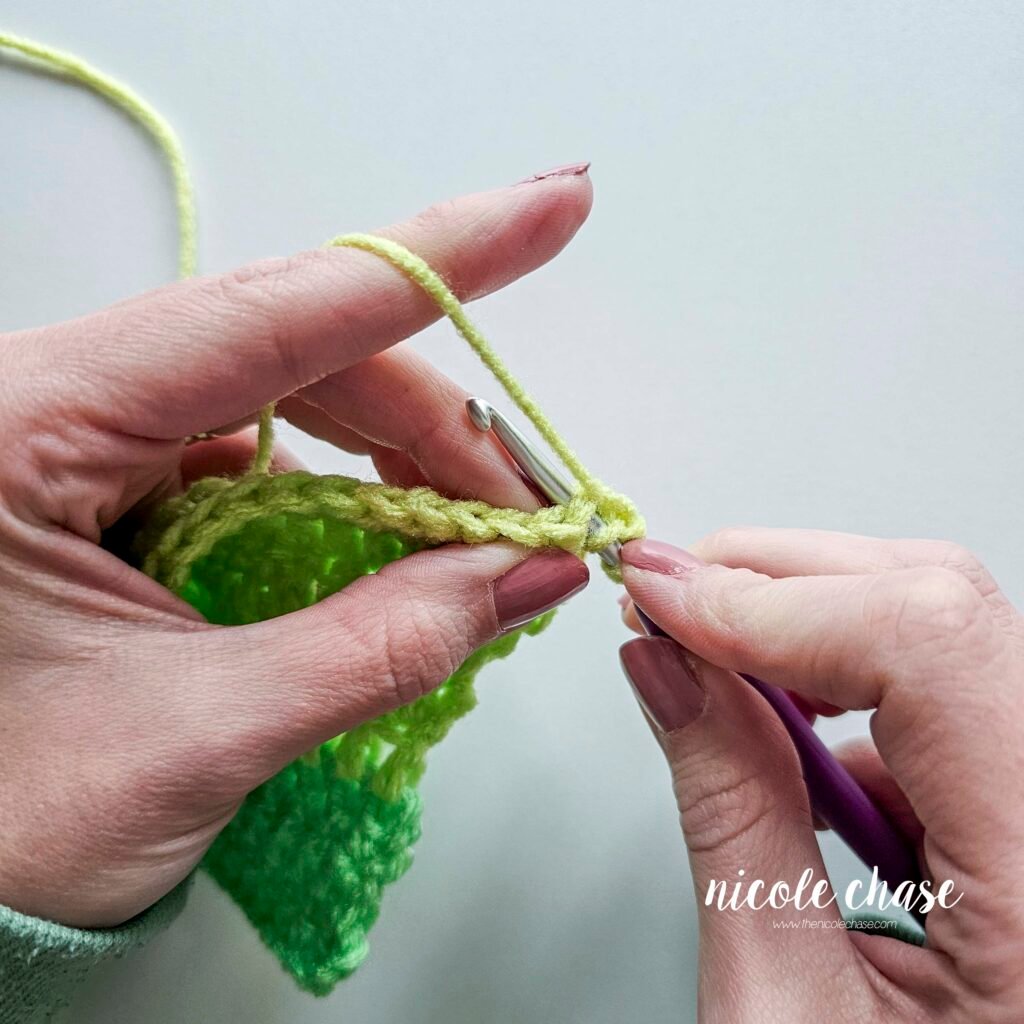
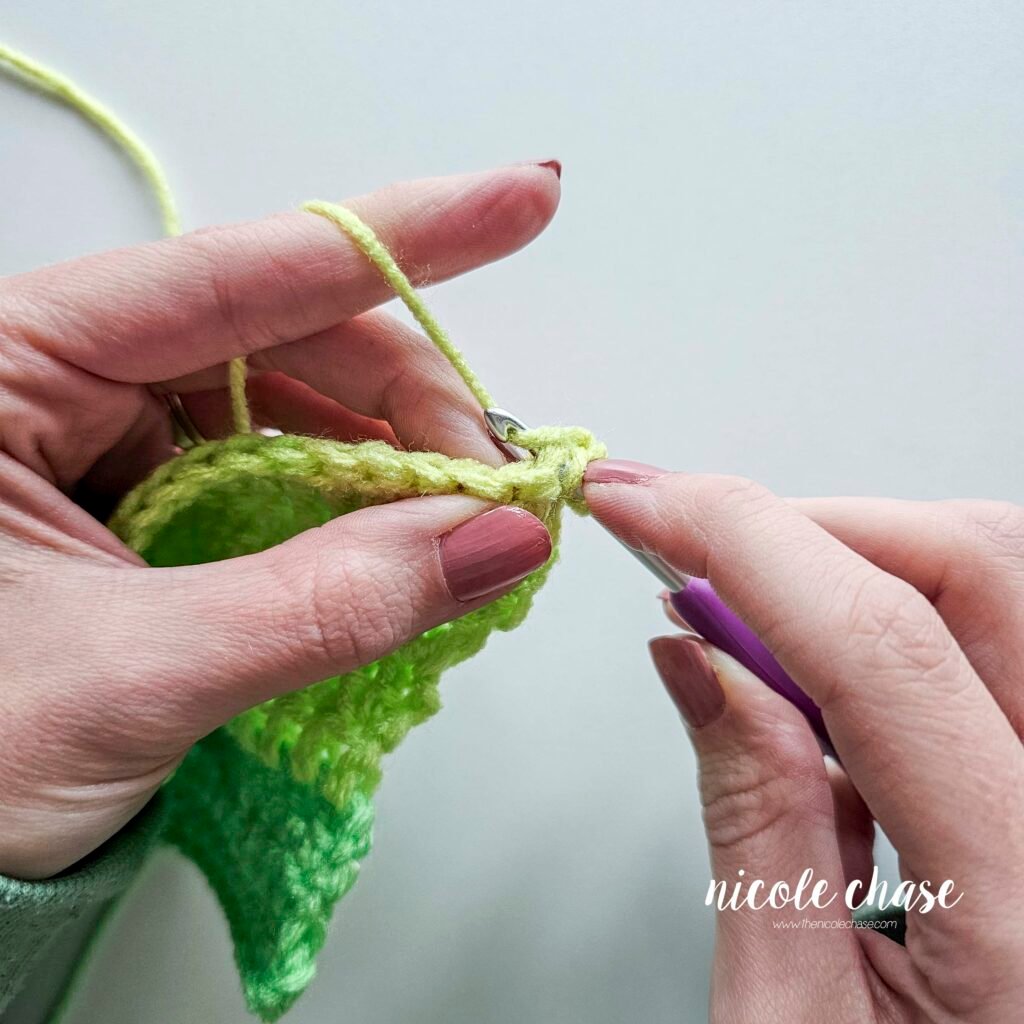
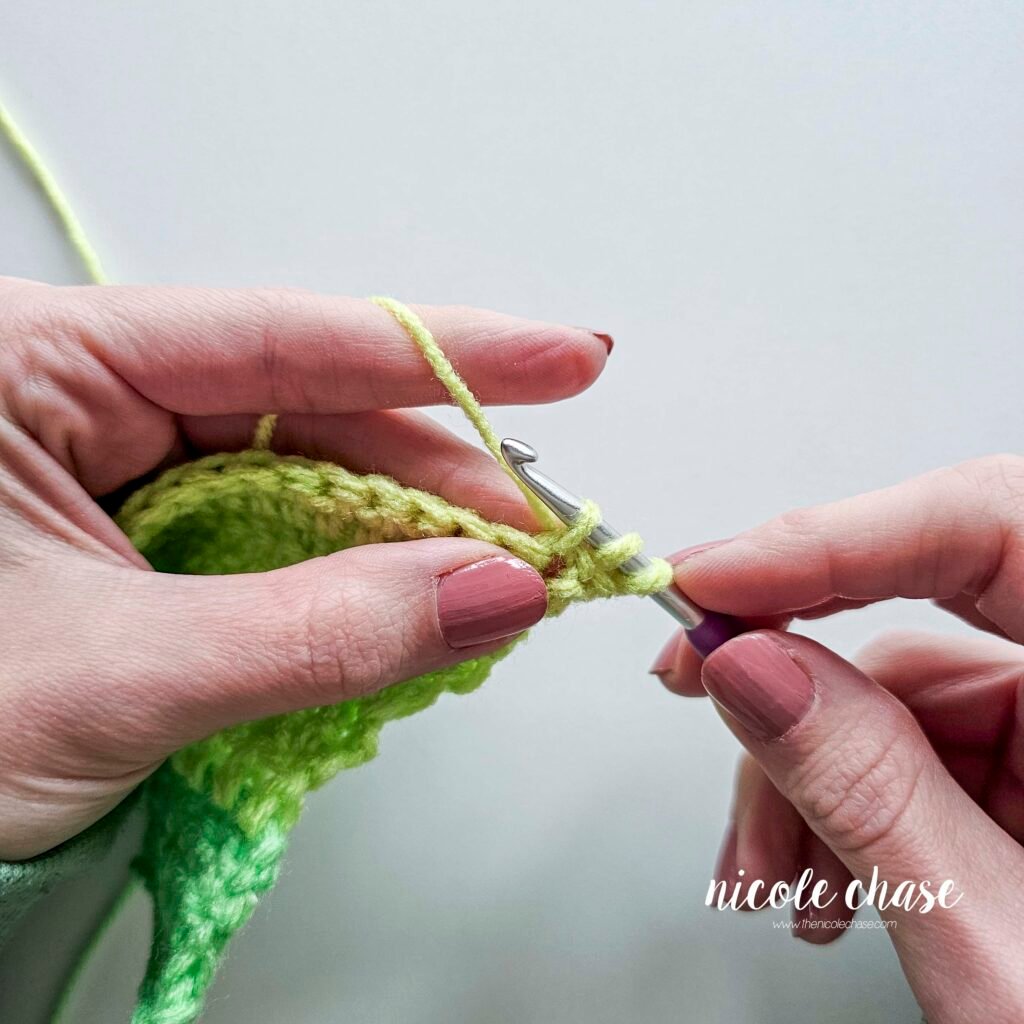
2. Partially Complete the First Stitch: Yarn over and pull through the first two loops on your hook (you should have 2 loops remaining on your hook). Do not complete the stitch.
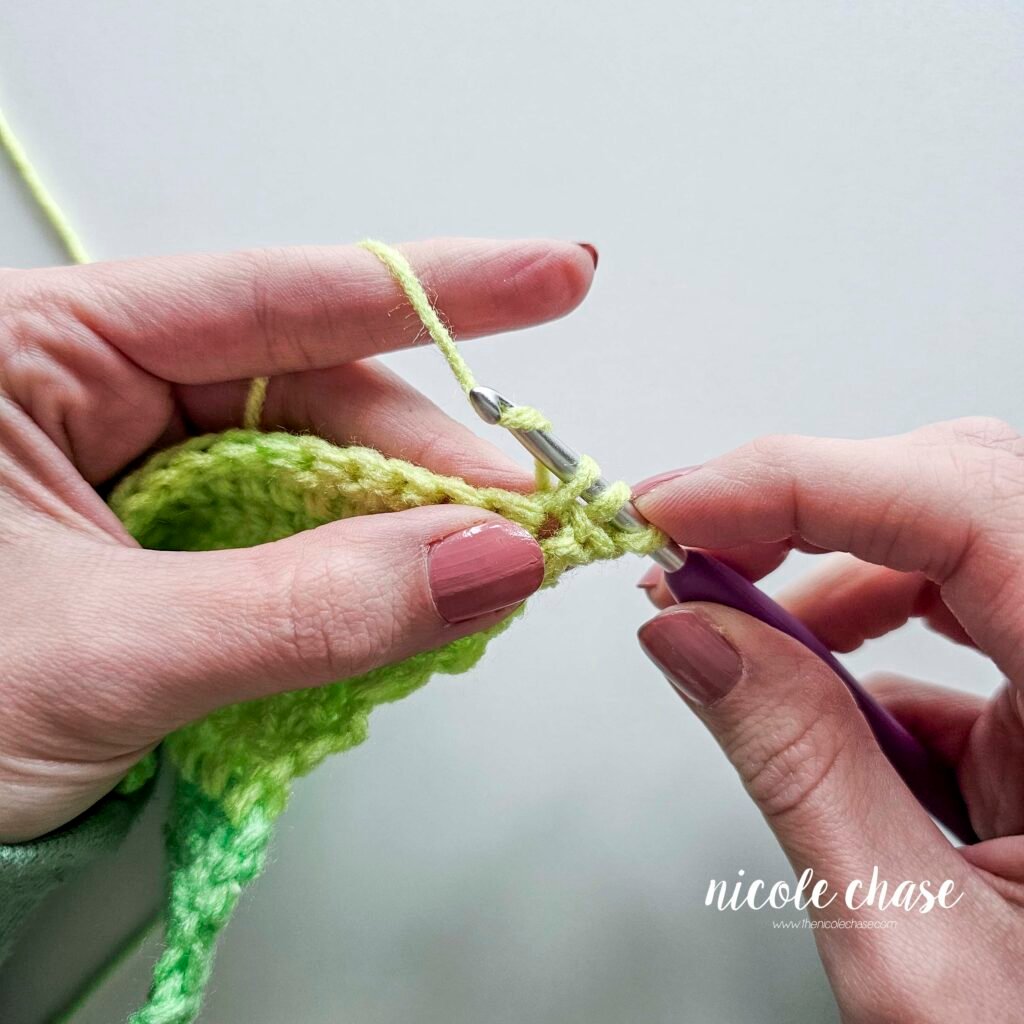
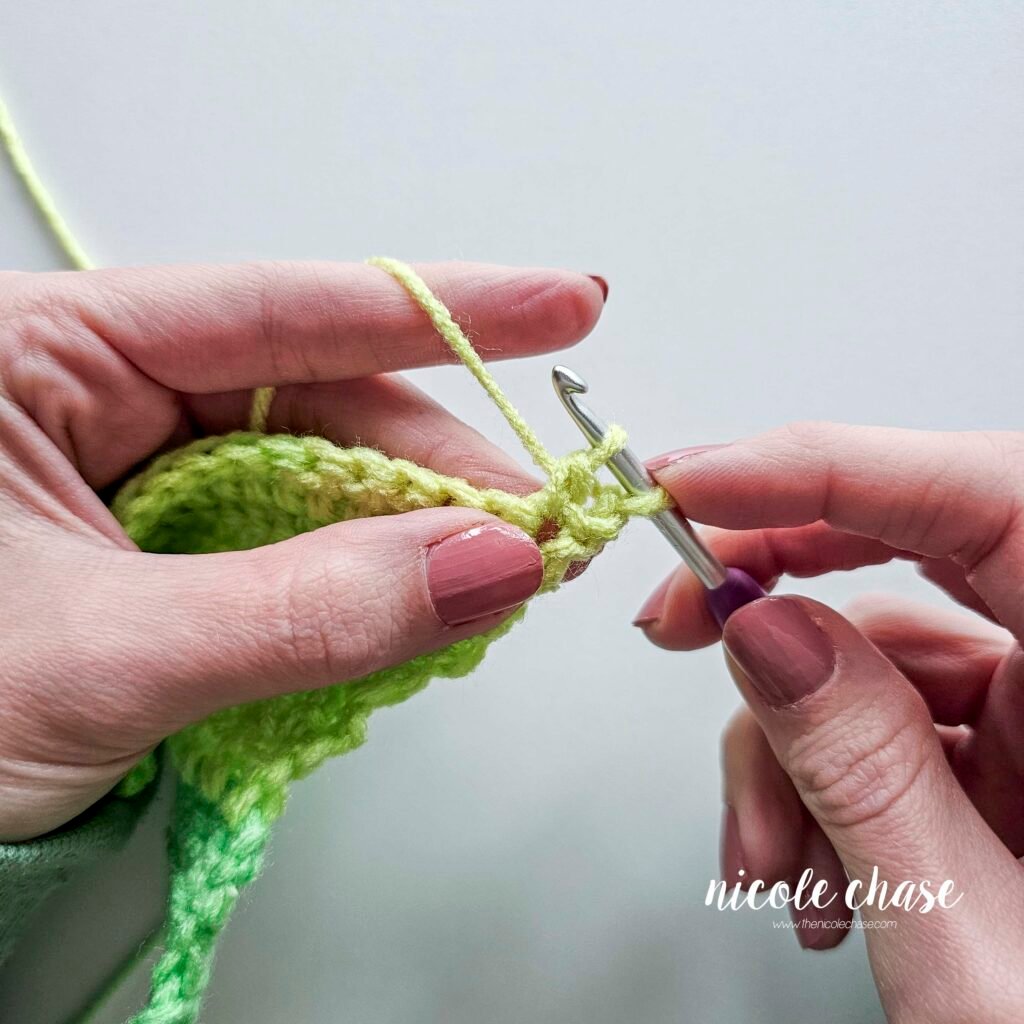
3. Start the Second Stitch: Yarn over again, and insert your hook into the next designated stitch, yarn over, and pull up a loop (you should now have 4 loops on your hook).
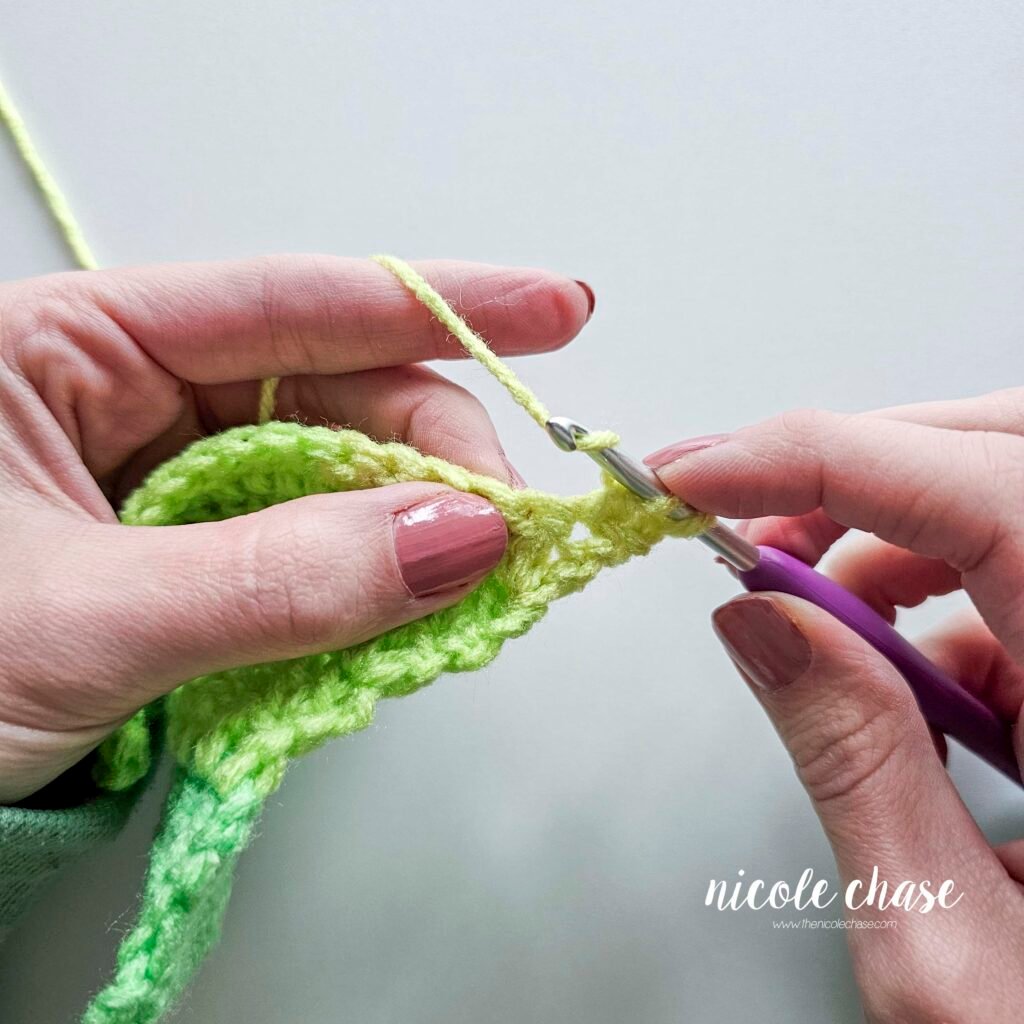
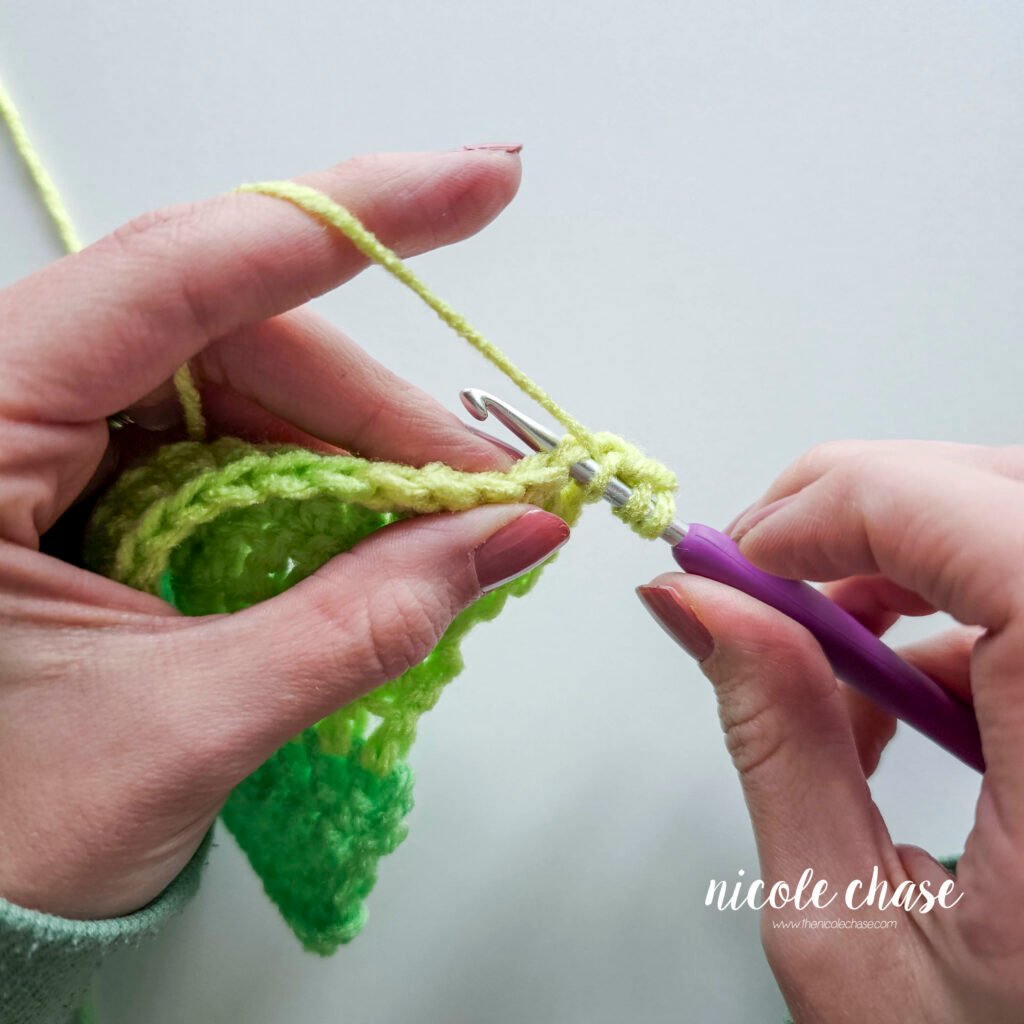

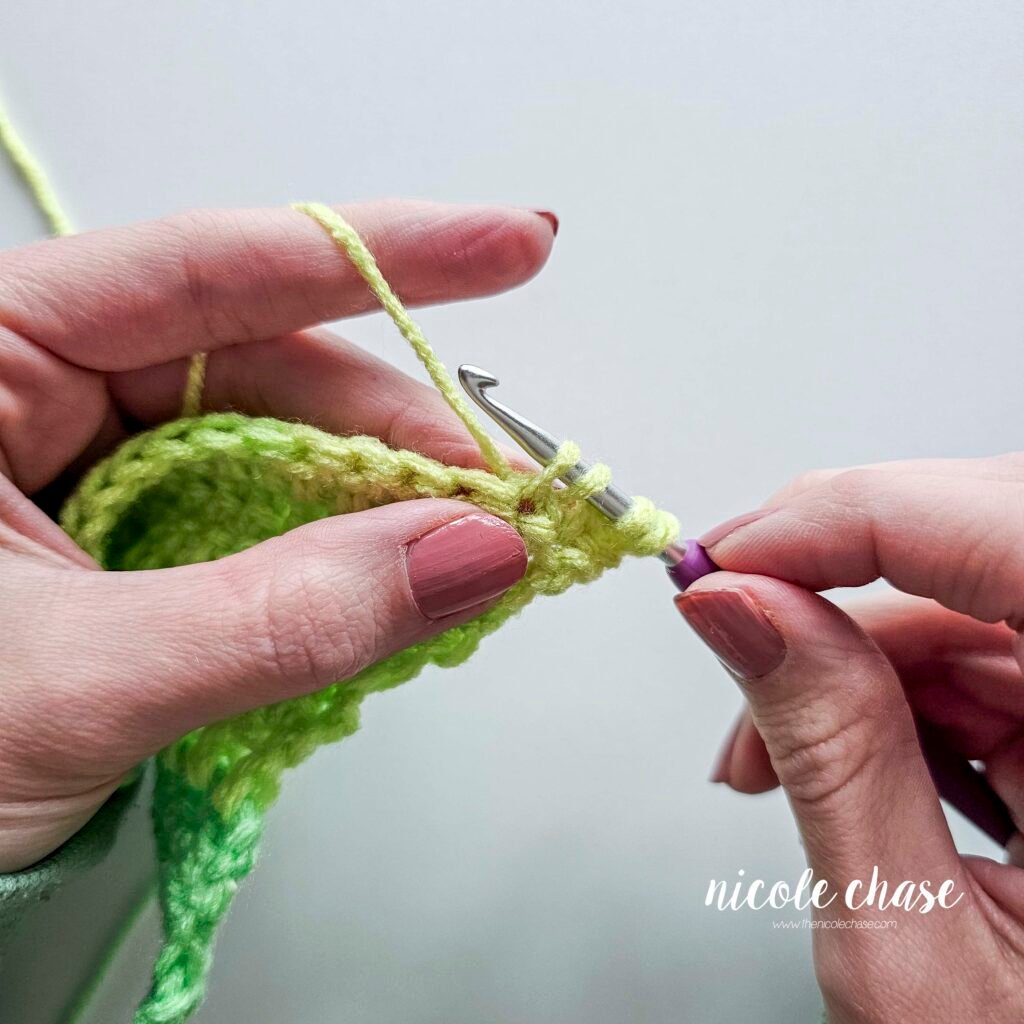
4. Partially Complete the Second Stitch: Yarn over, and pull through the first two loops on your hook (you should now have 3 loops remaining on your hook).
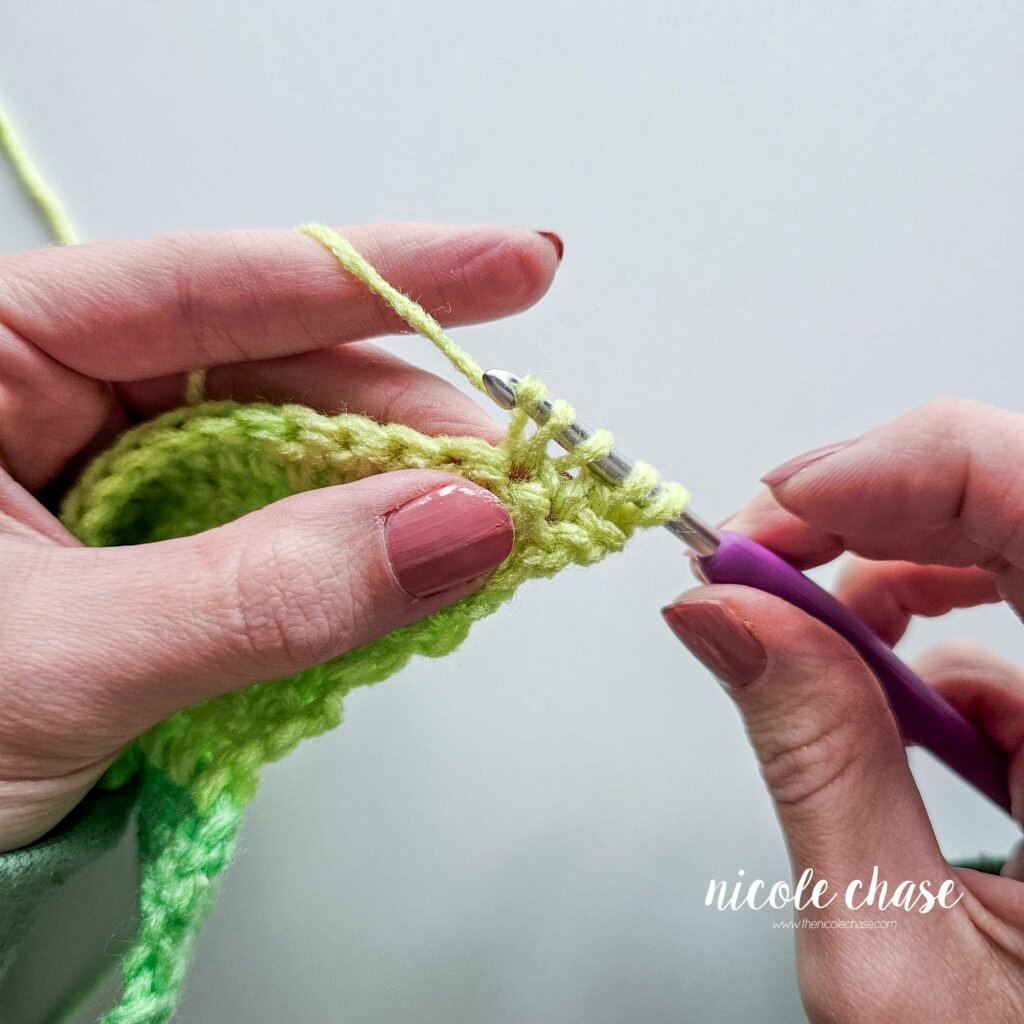
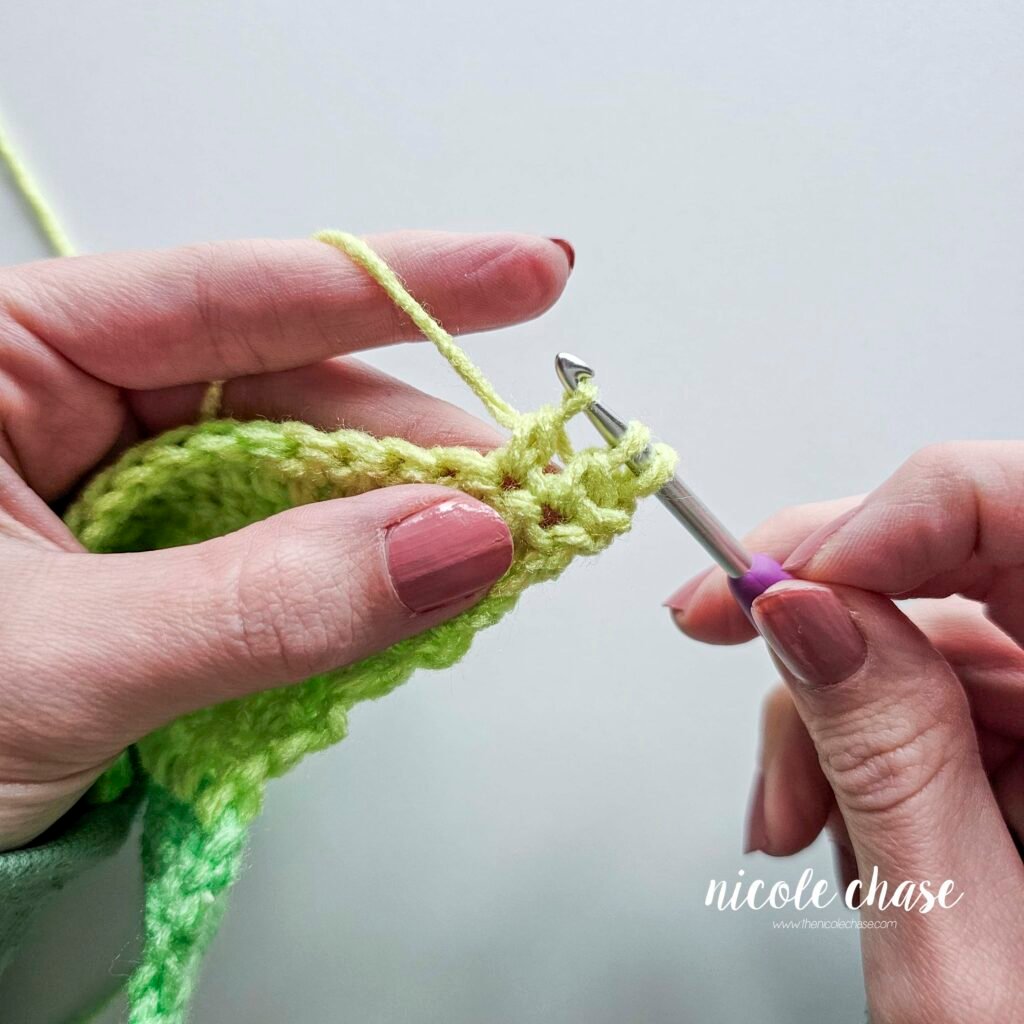
5. Complete the Decrease: Yarn over one final time, and pull through all remaining loops on your hook.
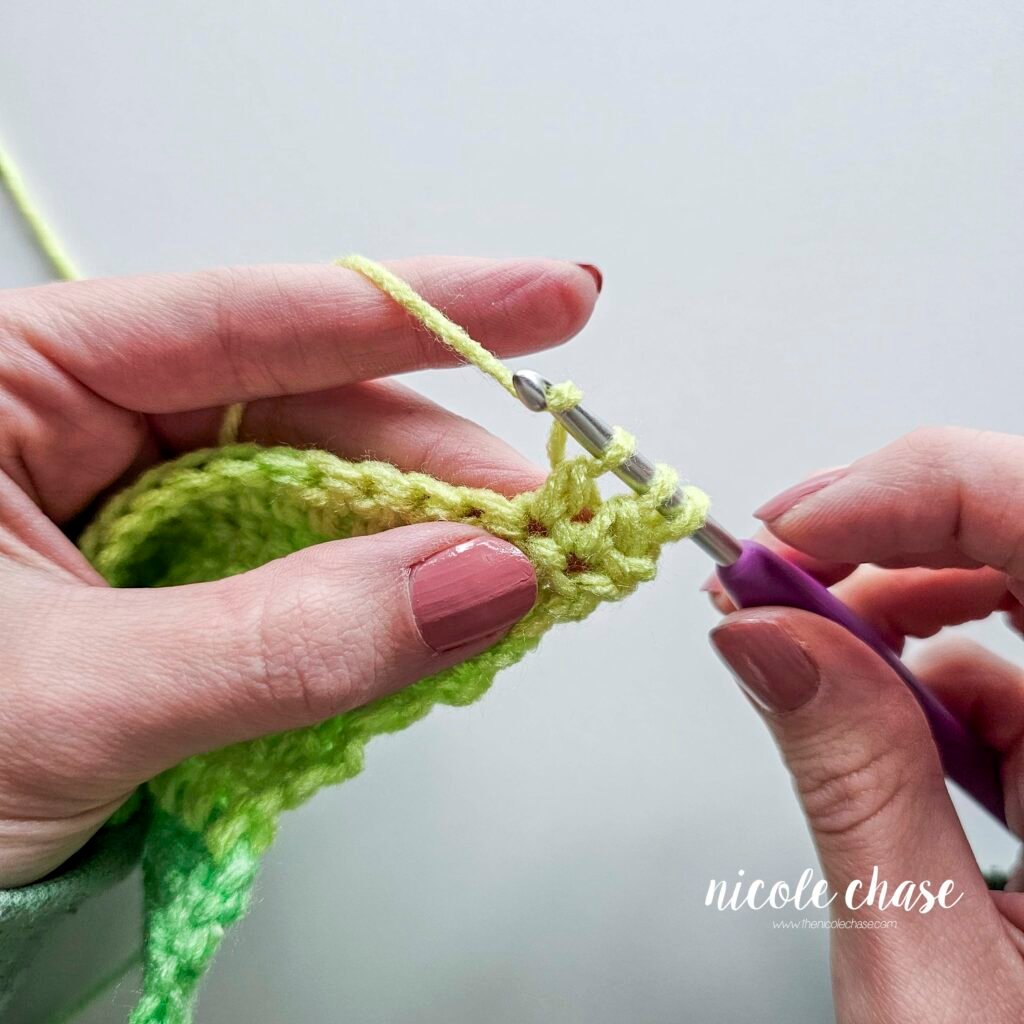
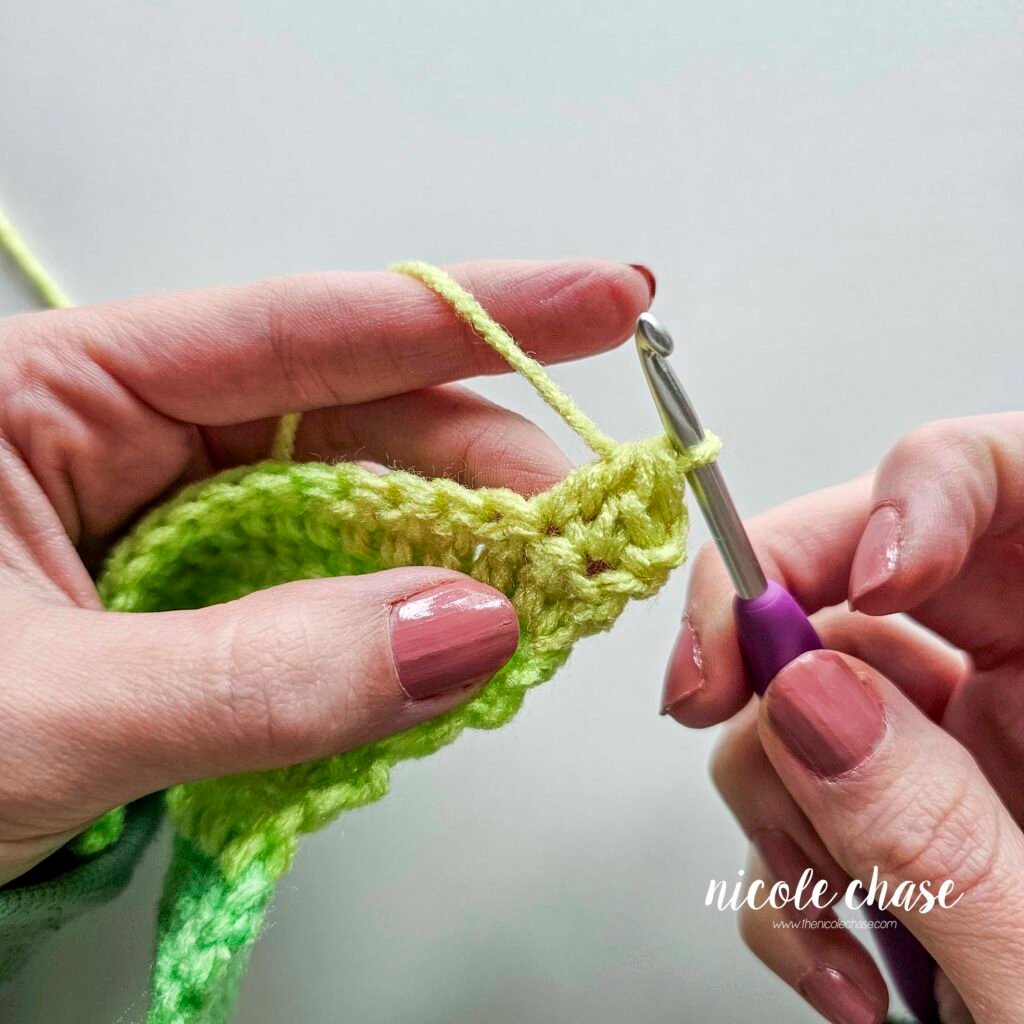
Here you can see the piece get more narrow, as each row starts and ends with a DC decrease. I started out with 18 double crochet stitches and then after 4 rows, the piece slowly became more narrow. I ended with a stitch count of 10 double crochet stitches.
Video Tutorial: Mastering the DC2tog and DC Increase
In this crochet video tutorial, I will demonstrate how to increase and decrease with the double crochet stitch.
This video is also available on YouTube. Watch this video: Double Crochet Inc and Dec Tutorial on YouTube.
DC Increase & Decrease FAQ
What is the difference between DC2tog and DC Decrease?
There is no difference! DC2tog is simply an abbreviation used in patterns for the double crochet decrease. Both terms instruct you to work on stitch over the space of two, to reduce your stitch count by one.
What does DC Inc mean in crochet?
DC Inc stands for double crochet increase. This means you are instructed to work two double crochet stitches into a single stitch or space. This is the basic method used to add stitches and widen your project.
Does a DC Decrease create a hole in the fabric?
When properly executed, a standard DC2tog should not create a noticeable hole. If you find holes appearing, you may need to tighten your tension slightly when you pull through the final loops.

More Crochet Tutorials
I hope that you’ve enjoyed learning the DC inc and DC dec. Be sure to check out some of my other tutorials to build your crochet skills:
- Single crochet increase and decrease tutorial.
- .Basic single crochet stitch tutorial.
- How to read crochet patterns for beginners.


I hope you enjoyed this post! Be sure to leave me a comment below to let me know what you think.
Want to see more from me? Be sure to subscribe to my email newsletter so that you never miss a post!
Follow along with me on Instagram for daily updates and a behind the scenes look at my designs.
I’d love to see what you make with this tutorial! Don’t forget to share your finished work with me: on social media by tagging me @thenicolechase, in your Ravelry projects, or post over in my Facebook group!
Thanks for stopping by! Happy crafting!
Nicole
PATTERN COPYRIGHT © 2026 NICOLE CHASE. ALL RIGHTS RESERVED.
PATTERN MAY NOT BE ALTERED, COPIED, REDISTRIBUTED OR SOLD AS YOUR OWN PATTERN.
YOU MAY SELL THE FINISHED PRODUCT ON A SMALL SCALE. PATTERN/DESIGN CREDIT GIVEN TO WWW.THENICOLECHASE.COM IS APPRECIATED. PERMISSION TO SELL DOES NOT INCLUDE MASS PRODUCTION. LARGE SCALE PRODUCTION IS PROHIBITED.
PHOTOGRAPHY COPYRIGHT © 2026 NICOLE CHASE. ALL RIGHTS RESERVED.
PHOTOS MAY NOT BE ALTERED, COPIED, REDISTRIBUTED OR SOLD AS YOUR OWN.
This post may contain affiliate links. If you make a purchase through links on our site, we may earn a commission.